Harads Arctic Heat joins PyroTex: turning textile waste into metallurgical biocarbon
Harads Arctic Heat is part of PyroTex, a new research project that will demonstrate how textile waste can be converted into metallurgical biocarbon to replace fossil carbon in iron production. The project runs from September 2026 to September 2028 and is funded by the Swedish Energy Agency.
The iron and steel industry needs to reduce its dependence on fossil raw materials. At the same time, growing volumes of end-of-life textiles must be handled in a resource-efficient way. PyroTex brings together partners from the textile, waste management and steel industries to address both challenges in one value chain.
From textile waste to metallurgical biocarbon
Textiles that can no longer be reused or recycled will be collected and sorted, then converted into biocarbon through pyrolysis at our plant in Harads, where the material is heated in an oxygen-free environment. Höganäs will then use the biocarbon in tests where iron ore is reduced to iron. The aim is to show, for the first time, that textile-based biocarbon works in an industrially relevant process.
The project builds on an earlier study, which showed that worn-out socks can be converted into biocarbon with properties suitable for metallurgical processes. PyroTex now takes the next step by demonstrating the full value chain at pilot scale.
“We have produced metallurgical biocarbon from biomass since 2014. Textile waste is a far more varied raw material that places different demands on how we control the process. That is the challenge we are taking on in this project,” says Niclas Norberg, CEO of Harads Arctic Heat."
Starting from an existing demand
Most textile recycling projects try to create demand for recycled material. PyroTex starts from the other end: the steel industry’s existing need for a sustainable carbon source.
“In most projects on textile recycling, the aim is to create demand for the recycled material in new products. We start from Höganäs’ existing need for a sustainable carbon source to replace today’s fossil carbon in steelmaking,” says Sandra Roos, Head of Sustainability at Kappahl Group.”
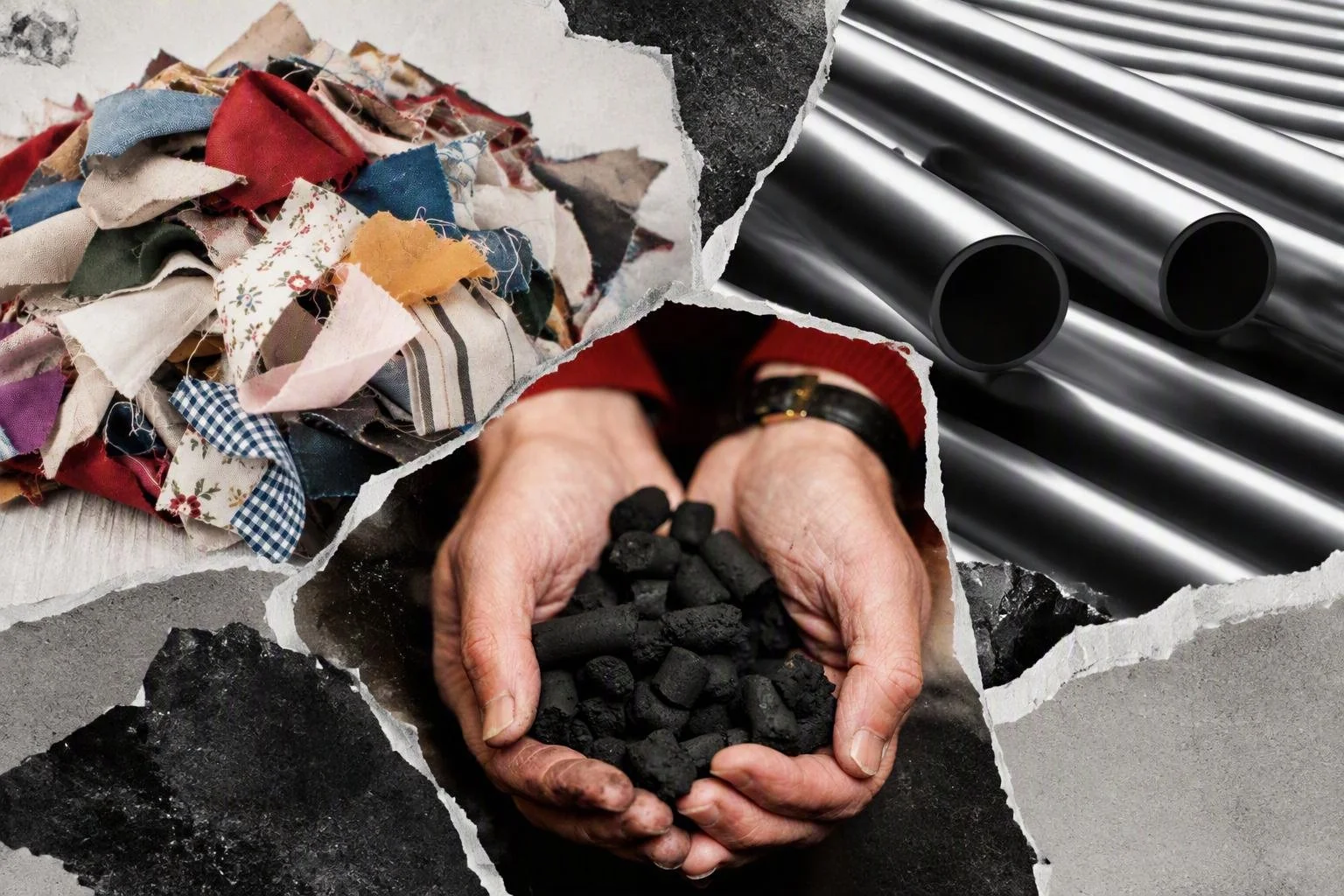
Beyond the technical performance, the project will assess climate benefit, resource efficiency, economics and policy aspects for future scale-up.
“To reach the climate targets, industry needs several solutions in parallel. PyroTex explores how a residual stream from the textile sector can become a valuable resource for the iron and steel industry,” says Pontus Hydén, Technical Expert at Höganäs AB.
About the project
PyroTex is coordinated by Höganäs AB and funded by the Swedish Energy Agency through the Swedish Metals & Minerals programme within Impact Innovation. The project runs from 1 September 2026 to 1 September 2028.
Project partners: Höganäs AB, University of Borås, RISE, Kappahl Group, H&M, Blåkläder, Borås Energi och Miljö, Telge Återvinning, Harads Arctic Heat and Wargön Innovation.
Source: Science Park Borås